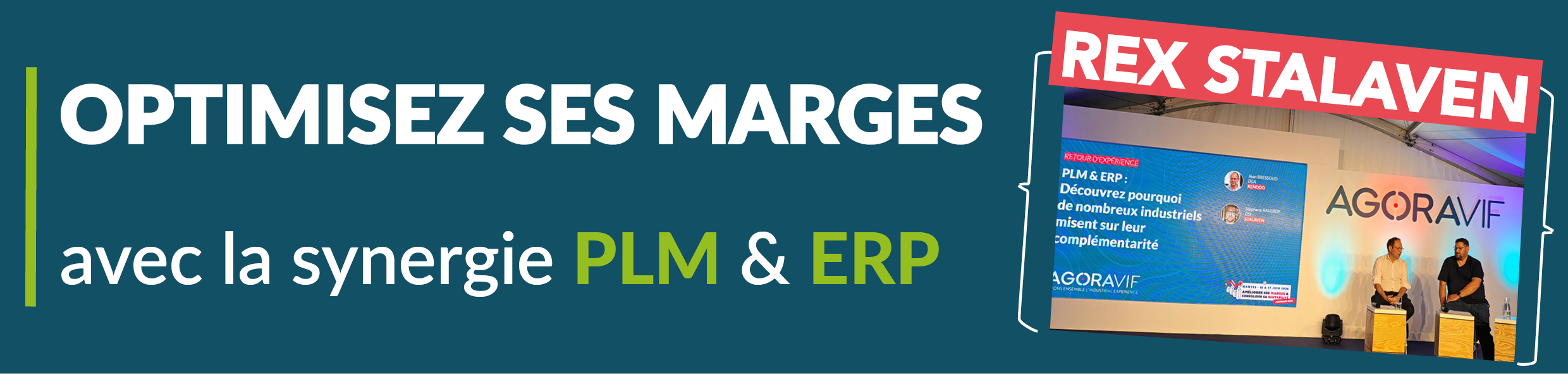
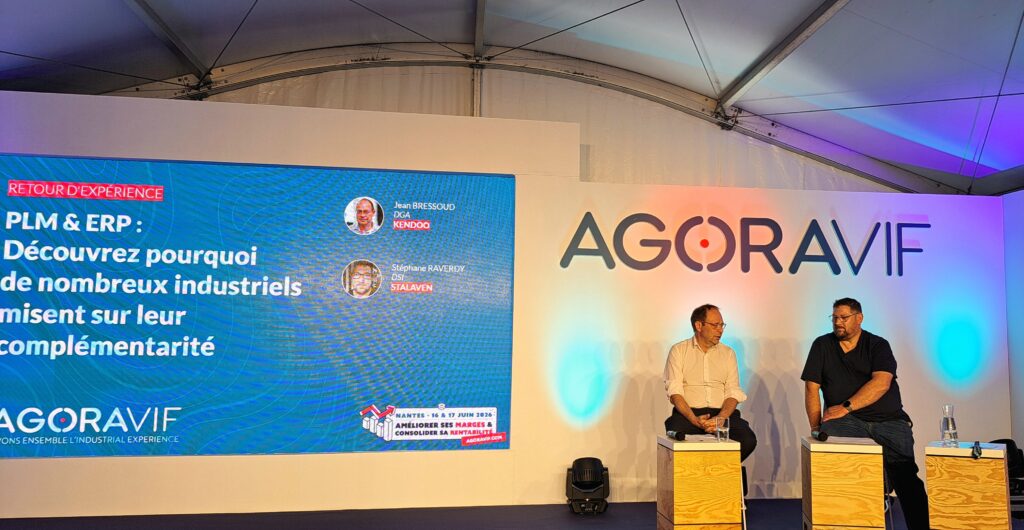
Dans un contexte de forte pression sur les prix et d’exigences réglementaires drastiques, l’industrie agroalimentaire n’a pas le droit à l’erreur. Pourtant, de nombreuses entreprises laissent encore s’évaporer leur rentabilité dans les failles de leur système d’information. Le 17 juin dernier, lors de l’événement Agoravif 2026 à Nantes, un retour d’expérience a particulièrement retenu l’attention des participants. Stéphane Raverdy (DSI de Stalaven) et Jean Bressoud (DGA de Keendoo) ont montré comment la synergie stratégique entre le PLM et l’ERP constitue le levier d’optimisation concret pour consolider les marges et doper la compétitivité de l’entreprise.
Avec 180 millions d’euros de chiffre d’affaires et plus de 10 900 clients, Stalaven a fait le choix de mettre le PLM au centre de son architecture IT : un véritable Data Hub. Depuis 10 ans, l’entreprise bretonne s’appuie sur la synergie PLM-ERP pour optimiser ses marges, garantir une qualité irréprochable des produits, frais et gourmands. et renforcer sa compétitivité.
La rentabilité passe aussi par la qualité des données
Pour le pilotage des marges, la direction a besoin de données fiables pour maîtriser ses coûts : l’ERP est son allié, de la commande à la livraison des produits.
Mais que se passe-t-il avant la production ? Quelle est la recette à fabriquer ? Avec quels ingrédients ? Suivant quel procédé de fabrication ? Quels allergènes doivent-être déclarés ? Quels sont les critères qualité à respecter ? Quelle DLC ou DDM (DLUO) appliquer ? C’est le PLM qui orchestre la création et les modifications des produits, en amont de la production.
Ainsi, le PLM (Product Lifecycle Management) et l’ERP (Enterprise Resource Planning) répondent à des objectifs distincts et complémentaires :
- Le PLM, l’assurance « Qualité des données » : Le PLM ne sert pas qu’à la R&D. Il s’agit avant tout d’un référentiel produits unique et partagé (MDM*-PDM**) qui centralise les données produits et les documents associés (cahier des charges, certificats, fiches techniques, BAT…). Avec plus de 1000 données à maîtriser par produit (liste d’ingrédients, allergènes, valeurs nutritionnelles, Nutri-score, étiquetage, visuels, label), il prépare, valide et fiabilise toutes les informations produit, de façon collaborative en amont, pour sécuriser la production. (*MDM : Master Data Management ; **PDM : Product Data Management).
- L’ERP, le moteur de la rentabilité opérationnelle : Il se concentre sur l’exécution. Son rôle est d’optimiser la supply chain, d’anticiper la production en temps réel et de maîtriser les coûts pour atteindre les objectifs de marges et de chiffre d’affaires, en garantissant le meilleur taux de service.
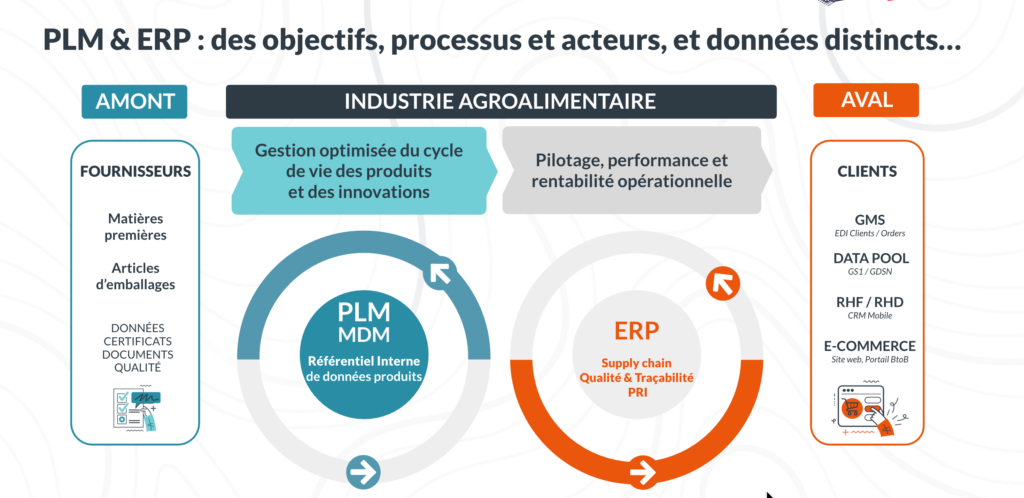
Maintenir une frontière entre la conception (PLM) et l’industrialisation (ERP) oblige à de multiples ressaisies et génère des doublons. Ces ruptures de flux allongent les délais et induisent des erreurs qui coûtent très cher à l’entreprise. Créer une véritable synergie entre ces deux systèmes, c’est instaurer un échange maîtrisé et automatisé de données fiables, constamment à jour. Il constitue le socle d’une optimisation à tous les niveaux, de la création à la distribution des produits.
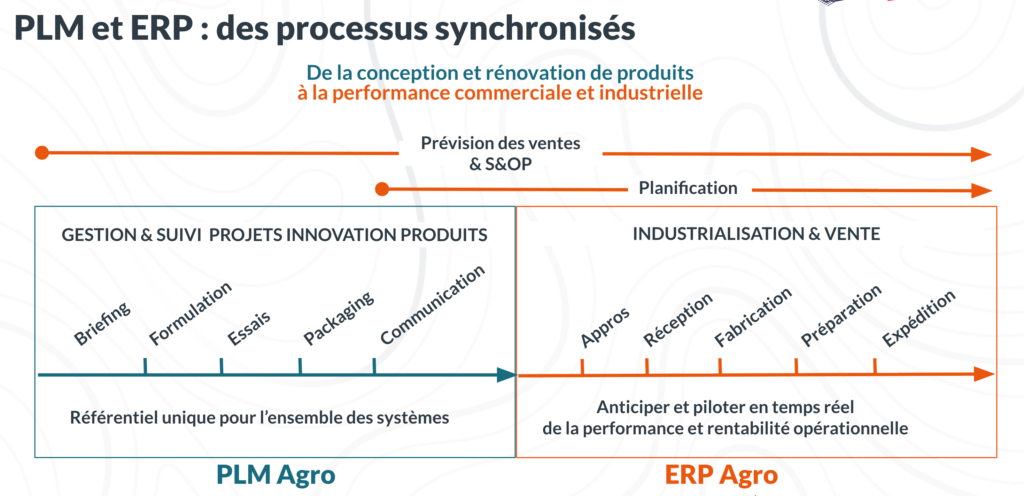
La véritable synergie s’opère à la croisée de ces deux processus, au service de l’optimisation. Cette connexion permet à la planification et à la prévision des ventes (S&OP : Sales and Operations Planning) de faire le pont entre l’amont et l’usine, de manière fluide. Concrètement, les données validées par le Marketing, la R&D, les Achats et la Qualité dans le PLM se déversent automatiquement dans l’ERP au bon moment. Résultat : les équipes de production, de supply chain et d’Administration des Ventes (ADV) exploitent une donnée exacte, permettant d’anticiper et de piloter en temps réel la performance industrielle et commerciale de l’entreprise, sans rupture de charge.
La synchronisation de bout en bout : de l’innovation à la performance industrielle
Au-delà de la simple donnée, l’élimination des silos permet de synchroniser deux chaînes de processus distinctes mais fondamentalement complémentaires. D’un côté, le PLM orchestre la gestion et le suivi des projets d’innovation et de rénovation. Il couvre toutes les étapes stratégiques en amont : le briefing, la formulation, les essais, le packaging jusqu’à la diffusion de l’information, constituant ainsi un référentiel unique pour l’ensemble des systèmes de l’entreprise. De l’autre côté, l’ERP prend le relais sur le terrain de l’industrialisation et de la vente. Il exécute et pilote de bout en bout les processus opérationnels : la commande, les approvisionnements, la réception, la fabrication, la préparation et l’expédition.
❝ En production, l’opérateur n’a plus à se poser de questions : il est sûr que c’est la bonne recette, à jour, le bon packaging ❞, Stéphane Raverdy, DSI de Stalaven.
Qualité et sécurité : les deux dimensions de la traçabilité agroalimentaire
C’est un point essentiel à garder à l’esprit : la sécurité d’une entreprise agroalimentaire repose sur deux types de traçabilité complémentaires.
- La traçabilité du cycle de vie des produit (la mission du PLM) : Il s’agit de la traçabilité des modifications produits. Le PLM historise de manière exhaustive chaque version d’une recette, chaque changement d’ingrédient ou d’emballage tout au long du cycle de vie du produit. Précieux en cas d’audit, en particulier IFS : l’entreprise montre qu’elle sait exactement qui a validé quoi et quand.
- La traçabilité physique par lot (la mission de l’ERP) : L’ERP prend le relais en usine pour tracer les lots de production. Il identifie les matières premières réceptionnées et les produits finis expédiés pour maîtriser la supply chain.
L’alliance des deux logiciels est la clé de voûte de ce dispositif : l’ERP gère la production physique d’un lot dont la conformité sanitaire, et le PLM gère l’historique de la conception et des rénovations produits.
Le ROI de la synchronisation : Les résultats concrets de Stalaven
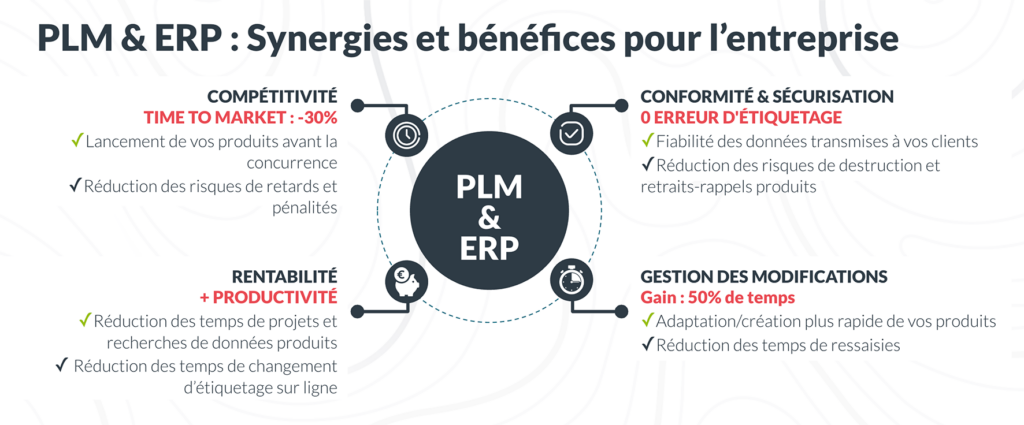
Chez Stalaven, la mise en place de cette synergie PLM-ERP a généré des bénéfices concrets et massifs, impactant directement la compétitivité et l’image de marque :
🏅 Excellence produit et fidélisation client : L’alliance des deux systèmes garantit une qualité produit irréprochable, avec des produits frais et gourmands reconnus et plébiscités par les clients. Cette excellence est sécurisée par le pilotage rigoureux des développement produit dans le PLM, garantissant le strict respect des labels et certifications de l’entreprise (IFS, AB, IGP, etc.), véritables leviers de valorisation sur le marché.
🚀 -30 % sur le Time to Market : L’entreprise observe une forte réduction des délais de mise en marché, et s’adapte aux demandes des clients en moins d’une semaine, là où il fallait jusqu’à trois semaines avant la mise en place du PLM. Un atout majeur pour capter de nouvelles parts de marché et renforcer sa compétitivité.
🛡️ 0 erreur d’étiquetage : La sécurisation totale des données réglementaires annule le risque financier et réputationnel lié aux retraits ou rappels de produits, souvent dû à des erreurs d’étiquetage, notamment sur les déclarations d’allergènes.
⏱️ 50 % de gain de temps : Fini les ressaisies et la recherche d’informations chronophage ! La centralisation des données dans le Référentiel Produits réduit considérablement les temps de recherche d’informations. Les développements et modifications des produits sont accélérés, réduisant significativement la durée des projets.
Keendoo : Le choix d’une solution souveraine pour protéger sa compétitivité
En tant qu’éditeur et intégrateur français fort de plus de 10 ans d’expertise, Keendoo s’impose aujourd’hui comme le partenaire stratégique de plus de 50 clients agroalimentaires. De nombreux leaders industriels s’appuient sur cette expertise pour sécuriser leurs données et leurs marges, parmi lesquels : Sodiaal PGC (Yoplait, Candia, Entremont), Sodebo, Eurial (Soignon), Bonduelle, Panzani, Altho (chips Bret’z), Marie Morin, Celtigel, Mellow ou encore Cosucra.
Opter pour une solution souveraine française, développée par et pour les professionnels de l’agroalimentaire, c’est s’assurer d’une couverture fonctionnelle exhaustive pour répondre aux exigences réglementaires en Europe, de la conception à la distribution. L’alliance stratégique d’un ERP avec l’expertise PLM de Keendoo est le levier qui transforme l’innovation produit en véritable rentabilité.
En résumé, des données produits et des flux bien maîtrisés constituent un véritable levier de compétitivité pour l’entreprise. Découvrez comment le PLM Keendoo centralise vos données produits et automatise les échanges avec votre ERP pour créer cette synergie.