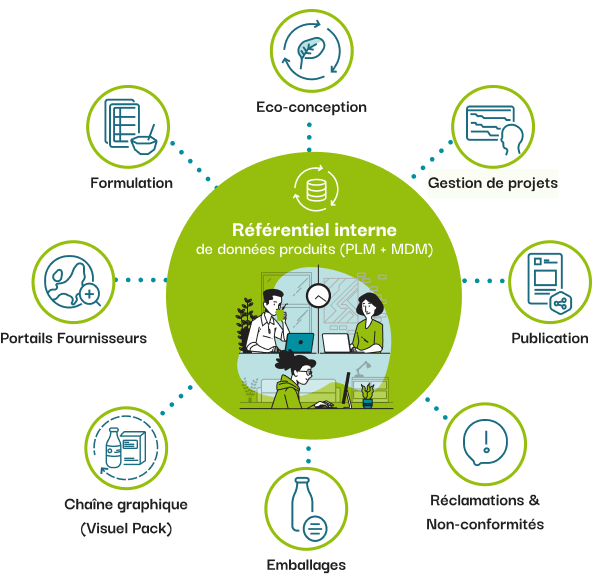
Structurer vos données produit, pour accélérer et sécuriser leur développement.
Keendoo PLM Agroalimentaire réunit dans un même référentiel toutes les données produits, les processus de validation et les documents qui prouvent la conformité des produits. Grâce à Keendoo, vous :
- augmentez votre adaptabilité,
- sécurisez vos process pour faire évoluer vos produits,
- réduisez le time to market,
- réduisez les non-conformités et coûts de non qualité,
- gagnez en compétitivité.
Découvrez comment Keendoo facilite votre travail au quotidien.
Des modules adaptés aux besoins des entreprises agroalimentaires
Ils sont complémentaires et vous permettent de constituer un référentiel de données produit complet et vivant.
Le Référentiel Interne
des Données Produit
- Rassemble toute les données (matières premières, emballages, recettes,…) dans une base commune, centralisée, structurées et sécurisée
- Relie les modules entre eux
- Conserve l’historique des versions
- Facilite la collaboration et fiabilise les données
Formulation Recettes
- Facilite la création ou modification des recettes dans une grille de composition dynamique
- Calcule en temps réel l’évaluation du prix de revient (PRI), de l’étiquetage INCO d’une recette en cours de formulation
- Simule plusieurs variantes d’une recette et compare les résultats sur les principaux critères de choix
Emballages
- Rassemble toutes les données relatives à vos emballages
- Calcule la recyclabilité des emballages des produits
- Exporte les données emballages pour alimenter les systèmes d’information externes (Citeo…)
Publication
Transmission des données
- Rassemble et sécurise toutes les données produit validées
- Constitue le catalogue des produits en cours de commercialisation
- Permet la transmission de données fiables vers d’autres systèmes d’information (ERP, data pool,…)
Gestion de Projets Produit
- Sécurise les processus de développement produit
- Pilote les portefeuilles de projets : clients, gammes de produits…
- Permet la création de différents modèles de projets : innovation, rénovation, mise à jour

Chaîne Graphique (Visuel Pack)
- Rassemble les éléments du brief
- Accélère et sécurise les relectures des différents service
- Facilite la collaboration de toutes les parties prenantes en interne et en externe (agence, traduction, pré-presse, imprimeur)
Portail Fournisseurs
- Sécurise la mise à jour des données à transmettre par les fournisseurs
- Facilite la collaboration avec les fournisseurs
- Collecte les données et documents qualité des matières premières et emballages
Éco-conception Produits
- Calcule l’impact environnemental des produits (PEF)
- Donne une vision globale de l’empreinte environnementale du produit selon les indicateurs ACV
- Compare les scénarios d’éco-conception
Gestion Réclamations et Non-Conformités
- Enregistre les réclamations et les non-conformités
- Permet de définir et suivre les plans d’action
- Facilite la collaboration pour la mise en oeuvre des plans d’action
Nos ingénieurs experts agroalimentaires vous accompagnent.
Notre équipe d’ingénieurs informatiques et d’experts du secteur agroalimentaire vous accompagnent pour assurer une installation souple et adaptée de la solution au sein de votre entreprise. Grâce à leur haute connaissance de votre secteur, ils vous guideront et vous aideront à prendre en main la solution.
État des lieux de votre système d’information produit et de vos processus
Mise en place des modules PLM Keendoo selon vos besoins
Accompagnement pour assurer une prise en main efficace
Des modules adaptés à vos besoins métiers
Découvrez l’utilité des modules Keendoo de façon détaillée, en fonction de votre métier dans l’agroalimentaire.









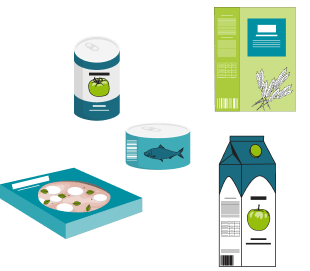
Besoin d’augmenter la sécurité et la compétitivité
de vos produits avec des solutions PLM ?
Depuis 10 ans, nous travaillons
avec cinquante PME et ETI Agroalimentaires.
Notre spécialisation nous permet d’être en phase avec les besoins des entreprises agroalimentaires, de parler le même langage. Nous connaissons parfaitement votre métier d’aujourd’hui et de demain.






















FAQ
Nous vous éclairons sur les questions les plus fréquentes qui nous sont posées.
Le PLM Keendoo vous permet de centraliser en un seul outil toutes les données de vos produits agroalimentaires (recettes, allergènes, valeurs nutritionnelles, étiquetage, emballages, conformité réglementaire, unités logistiques) et de les partager entre vos équipes Marketing, R&D, Qualité, Production… Contrairement à un PLM généraliste, il intègre nativement les spécificités de l’agroalimentaire (bases Ciqual/USDA, étiquetage INCO, calculs nutritionnels automatiques) et il est disponible en seulement 3 jours avec notre solution clé en main Quick Start PLM.
→ Pour la définition complète d’un PLM, consultez notre article PLM agroalimentaire : définition et bénéfices.
Chez Keendoo, le PLM et l’ERP travaillent main dans la main : le PLM structure et fiabilise les données produit (recettes, formulation, conformité), que l’ERP utilise ensuite pour piloter les achats, la production et la facturation. Le PLM Keendoo est nativement interfacé avec l’ERP VIF, référence dans l’agroalimentaire, ainsi que d’autres ERP (SAP, etc) via ses API Rest, pour une transmission fluide des données sans ressaisie.
→ Pour le détail des rôles respectifs du PLM et de l’ERP, consultez notre article dédié.
Non, les deux sont complémentaires et interviennent à des moments différents. Keendoo structure et fiabilise vos données produit en amont, pendant la conception et la validation. Le data pool GS1 (Equadis, AGENA 3000, TX2…) les diffuse ensuite à vos distributeurs. Le module Publication et Transmission des données de Keendoo alimente directement votre data pool, sans ressaisie.
Principales différences entre un PLM et un data pool GS1 :
|
Logiciel |
PLM (Product Lifecycle Management) |
Data Pool GS1 |
|
Objectif principal |
Gérer la conception et le cycle de vie des produits (développement, formulation, packaging…) |
Standardiser et diffuser les informations produit aux distributeurs |
|
Utilisateurs principaux |
R&D, Qualité, Marketing, Réglementaire |
Services commerciaux, Category Managers, Distributeurs |
|
Données gérées |
Recettes, ingrédients, allergènes, valeurs nutritionnelles, emballages, conformité réglementaire, fiches techniques, visuels, packshot… |
Références produit, codes-barres (GTIN/EAN), dimensions, poids, prix, informations marketing |
|
Flux d’information |
Interne à l’entreprise (développement produit) |
Externe (transmission aux distributeurs via le réseau GDSN GS1) |
|
Évolutions et mises à jour |
Suivi des modifications et validation contrôlée des produit tout au long de leur cycle de vie |
Diffusion des données validées et mises à jour aux partenaires commerciaux |
|
Exemple d’utilisation |
Un industriel agroalimentaire développe une nouvelle recette et gère sa conformité réglementaire dans le PLM |
Une fois la recette et l’emballage finalisés, les informations produit sont envoyées aux distributeurs via un data pool GS1 |
🤝 Complémentarité entre PLM et data pool GS1 :
1️⃣ Le PLM permet de développer, structurer le produit en interne.
2️⃣ Une fois le produit finalisé et validé, les informations essentielles (EAN, dimensions, composition, allergènes, valeurs nutritionnelles…) sont exportées du PLM vers le data pool GS1.
3️⃣ Le data pool GS1 diffuse ensuite ces informations aux distributeurs, marketplaces et partenaires logistiques.
🚀 Exemple concret :
Un fabricant de yaourts crée une nouvelle recette dans son PLM, en y renseignant les ingrédients, valeurs nutritionnelles, allergènes, etc. Une fois le produit prêt à être commercialisé, il envoie ses données vers Equadis ou AGENA 3000, qui les transmettent aux supermarchés pour la mise en rayon et la vente en ligne.
💡 En résumé :
- Le PLM gère l’innovation et la création produit.
- Le data pool GS1 sert à la commercialisation et à la diffusion des informations aux distributeurs.
Le plus rapide : Quick Start PLM Keendoo, la solution clé en main pour les PME et ETI agroalimentaires, mise à disposition en 72 heures. Elle réunit le référentiel produit qui centralise toutes les données, fichiers et historiques de modification, et la gestion de projet qui aligne marketing, R&D, qualité et achats, avec des processus de validation collaboratifs qui sécurisent la conformité réglementaire. Tarif tout compris, hébergement Cloud sécurisé, prise en main rapide.
→ Découvrir Quick Start PLM Keendoo
Pour aller plus loin, vous ajoutez les modules dont vous avez besoin, à votre rythme : Formulation Recettes, Emballages, Publication et Transmission des données, Portail Fournisseurs…
Le déploiement d’un module suit quatre étapes :
- Cadrage. On choisit un périmètre de départ, une gamme ou un site, et la priorité métier qui apportera le gain le plus visible : réduire le time to market, fiabiliser l’étiquetage, préparer les audits.
- Équipe projet. Un référent IT, un référent métier et quelques key-users.
- Paramétrage et tests. Configuration du module, connexions à votre ERP et à votre data pool GS1, puis tests et formation des key-users.
- Mise en production, puis extension progressive aux autres gammes, sites ou modules.
Les key-users forment ensuite leurs collègues : c’est ce qui fait l’adoption.
Vous avez une autre question ?